


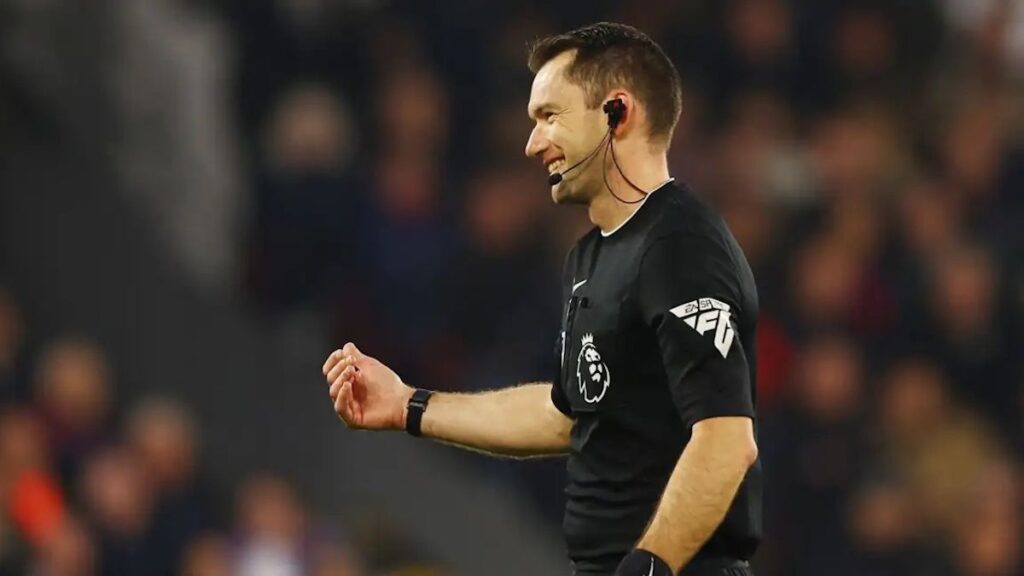
IFAB has officially approved the use of body cameras on referees during official matches. This innovative measure, driven by the good results obtained in the last Club World Cup, has the support of FIFA and could soon be implemented in various national and international competitions.
Body Cameras – IFAB Official Protocol
The objectives are to explore whether the use and deployment of body cameras by referees in football acts as a deterrent and, therefore:
-
Improves the behavior of participants (players and coaches) towards the match referees.
-
Provides match officials with some security and protection.
The following principles and practical aspects must be followed to provide clarity and consistent use, and to ensure that the data and feedback generated allows IFAB to make an informed decision about any future use in the game.
Any national FA wishing to join must:
-
1. Submit a written request to IFAB, clearly stating in which competition(s) they would like referees to wear body cameras.
-
2. Receive written permission from IFAB to join the trial.
-
3. Ensure that the principles and protocols are fully applied without modifications or deviations (unless previously agreed with IFAB).
-
4. Body cameras cannot be used in any competition for which permission has not been given.
-
5. Provide all data/feedback requested to IFAB.
Official Protocol Approved by IFAB
The protocol has been approved by IFAB and must be used in its entirety. No variations are allowed, except as stipulated in the protocol.
Principles:
-
1. The body camera is only allowed in those competitions that are approved as part of the official IFAB test.
2. The equipment will be provided by the national FA and will remain its property.
3. The body camera is only used by the referee. xThe default position of the body camera is OFF (i.e., it is not activated during the entire game).
4. The body camera is only activated by the referee in exceptional circumstances (see below). xAll images are the property of the national FA.
5. Recordings of any incident of misconduct or discipline that has required the referee to activate the body camera must be sent after the match to the person(s) designated by the national FA.
6. It is strictly forbidden for the referee to share images (except in the cases mentioned above) and will be considered misconduct. Body cameras must be encrypted to prevent this function.
7. The images will only be used by the disciplinary departments of the national FA as supporting evidence, when deemed necessary and appropriate.
8. All material must be destroyed within 60 days and the national FA must not store it beyond that time.
Practical aspects
-
Before the start, the referee must remind the club officials of both teams that the body camera can be activated during the game.
-
The referee must remind the captains during the coin toss that the body camera can be activated during the game.
-
The body camera should only be activated (before, during and after) in exceptional circumstances, for example:
-
– If the referee feels in danger or their safety is compromised or threatened.
-
– For an expulsion (red card) or other key match incident in which the referee experiences or anticipates serious misconduct towards the referee.
-
– For serious misconduct towards a match referee committed by a club official during and/or shortly after an expulsion (red card) or other key match incident.
-
-
Whenever possible, the referee should advise the player or players that the body camera is being activated.
-
The body camera is not used to record:
-
– Misconduct between players.
-
– Individual incidents/decisions, for example, handball, DOGSO, serious foul play, etc.
-
-
The body camera should not be activated to capture the behavior of non-participating people (spectators, parents, public, etc.).
-
If the body camera is activated, the referee must return it to its default “OFF” position when the misconduct incident has ended.
-
After the match, the referee must report all misconduct or discipline of the match in the normal way (including those in which the body camera has been activated).
-
After the match, the referee must maintain the body camera device by charging and downloading any archive material according to the processes described in the guidelines provided by the body camera provider.
The keys to the use of body cameras in referees
The international body that regulates the rules of football has considered that this technology improves the transparency of refereeing decisions and allows fans to have a closer view of what happens on the field, especially in high-tension situations.
-
Fans will be able to have a clearer view of the sanctions and interactions between players and referees.
-
Leagues interested in participating must request permission from IFAB and FIFA.
-
The objective is to improve the experience for both players and fans. Technology becomes a decisive ally.
-
Possibility of listening to refereeing decisions in real time, through screens in stadiums and television broadcasts.
-
Opportunity for fans to immerse themselves in the world of refereeing and understand the process behind each decision.
-
Body cameras could mean the end of many controversial decisions and change football forever.
-
This technological advance has the potential to revolutionize the way football is played and perceived.
FIFA values the experiment in the Club World Cup as successful
During the past Club World Cup, tests were carried out with cameras integrated into the referee uniforms. The images obtained were used in official broadcasts and special content, generating a positive response from both viewers and technical analysts.
According to FIFA, these tests “were key to demonstrating the potential of the tool”, not only in terms of entertainment, but also as a resource to improve referee training and subsequent analysis of decisions during matches.
Next implementation of cameras in referees in official leagues and tournaments
The approval of IFAB opens the door for the different federations and leagues to adopt this measure in the short term. Although there are still no definite dates, several top-level competitions have already shown interest in incorporating this technology as part of their innovation and transparency strategy.
The use of body cameras could be included in matches of LaLiga, the Premier League, the Champions League or even in qualifying phases for international tournaments, provided that privacy is respected and it is used for technical or television purposes previously authorized.
Impact on modern football
This measure is part of a global trend towards greater professionalization and openness in refereeing. The images captured from the point of view of the judges allow us to better understand the criteria behind controversial decisions, as well as identify behaviors of the players that are not always visible from conventional cameras.
In addition, it is considered that these cameras can serve as a deterrent to protests or simulations, as the actions and words are recorded with total clarity in key moments.
Suggested internal links
Suggested external links
- FIFA official website
- IFAB official website
- UEFA Champions League
- LaLiga official website
- RFEF official website
- Premier League official website
If you want to expand the information of this news and many more, you have everything on our website www.fcbarcelonanoticias.com.